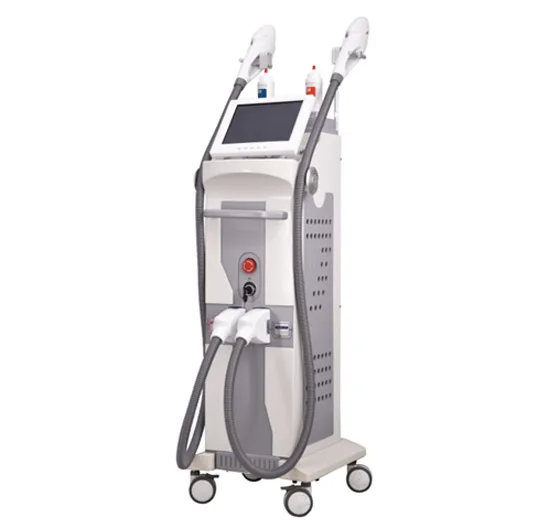
How it works
Why the filter cut-off is the whole argument
Pulsed light works by selective photothermolysis: light gets absorbed preferentially by a pigmented target, and if the pulse is short enough relative to how fast that target sheds heat, damage stays where you aimed it. Anderson and Parrish laid this out in Science in 1983, and every dosing chart since has been a variation on it (see PubMed 6836297).
Now apply that to the filters. The 610nm cut-off throws away the blue-green end that epidermal melanin absorbs hardest, so more of what's left reaches the follicle bulb. That's your hair filter. Drop to 530nm and you let back in the band that superficial pigment and oxyhaemoglobin both grab — useful for tone work, less forgiving on tanned skin. The 585nm option sits between the two for vessels. Same lamp, same handpiece. Different physics.
Pulse splitting and the epidermis
Each shot can be broken into a first pulse and sub-pulses with a programmed gap. Those gaps are not decoration. They let the epidermis dump heat between bursts while the bulkier target keeps accumulating it, which is how you treat a Fitzpatrick IV without stripping the surface. Our internal parameter charts move in exactly that direction as skin gets darker: shorter first pulses, lower IPL energy, longer courses.
What RF adds that light can't
Radiofrequency current at 2.64MHz heats dermal water. It doesn't read colour, so it doesn't punish melanin. Two practical consequences: you can hold optical fluence lower on darker patients and still deposit useful thermal load, and the dedicated RF handpiece gives you a tightening modality that runs independently of the flashlamp. Results depend on the operator matching parameters to the patient — this is professional equipment, not a consumer gadget, and nothing here is medical advice.
Applications
Where the parameters land clinically
- Unwanted hair on face, limbs, underarms and body — HR filter, anagen-phase only, so it's a course (hair removal protocols)
- Dull tone, coarse texture, early photoageing — SR filter (photorejuvenation)
- Freckles, sun spots and other epidermal pigment sitting near the surface
- Diffuse redness and fine superficial vessels — VR filter (vascular lesions)
- Active acne and post-acne marks
- Mild laxity and fine lines, handled by the RF side
Cases this platform should hand off
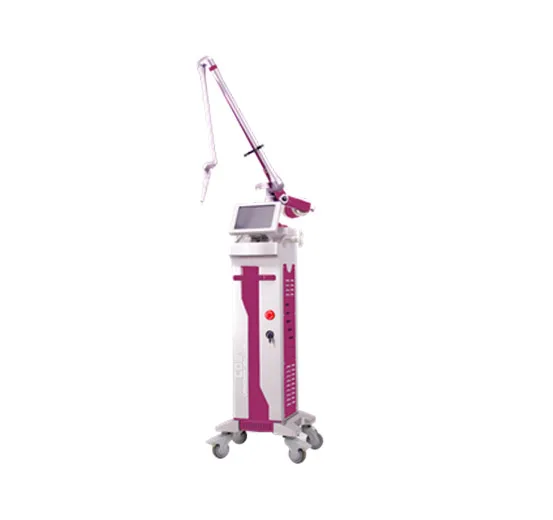
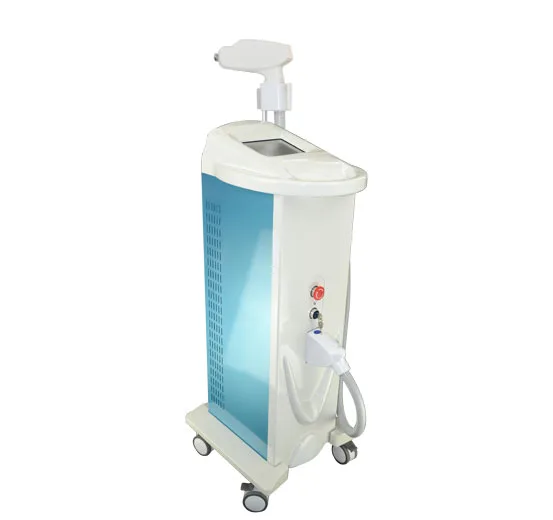
Know the edges. Deep dermal pigment, nevus of Ota and tattoo ink need nanosecond pulses, not milliseconds — that's QN-03 territory. Larger or deeper leg vessels respond better to a long-pulse Nd:YAG. A high-volume hair room doing back-to-back bodies all day will out-earn this platform with a dedicated diode system. And if you only ever wanted tightening, buy RF-01 and skip the optics. Screening candidates, flagging suspicious lesions for biopsy and managing PIH risk stay with the practitioner.
Key advantages
Selection notes against our other platforms
MF-05 versus PE-01 is the question we get most. PE-01 is the pulse-quality answer: homogeneous pulse output, flatter energy across the shot, better suited to a room where photofacials on mixed skin types are the main earner. MF-05 is the breadth answer — separate RF handpiece with mono-polar and multi-polar tips for face and body, two IPL spot formats, one console. Pick by what fills your appointment book.
Practical points buyers ask about
- Filter swaps take a couple of minutes, so one room can run hair reduction before lunch and rejuvenation after.
- Three cooling paths — water, air, semiconductor — keep the tip below zero through long blocks rather than sagging after twenty shots.
- The 60mm×15mm head clears legs and backs fast; the 8mm×40mm head handles upper lip, nose and jawline.
- Consumables are honest and finite: the xenon lamp is a wear part. Ask for the replacement interval in writing and check the shot counter at acceptance.
- Interlocks, the key switch and the emergency stop should all be tested on install day, not on your first paying patient.
Compliance and acceptance
Non-laser light source equipment in this class is covered by IEC 60601-2-57, which spans optical radiation from 200nm to 3000nm (IEC webstore). When you evaluate any IPL platform, ours included, ask which standards the file was tested against and who issued the certificate. Our service team supplies commissioning documentation to distributors on request.